Painting
A collection of paintings and encaustics that tell their own stories.
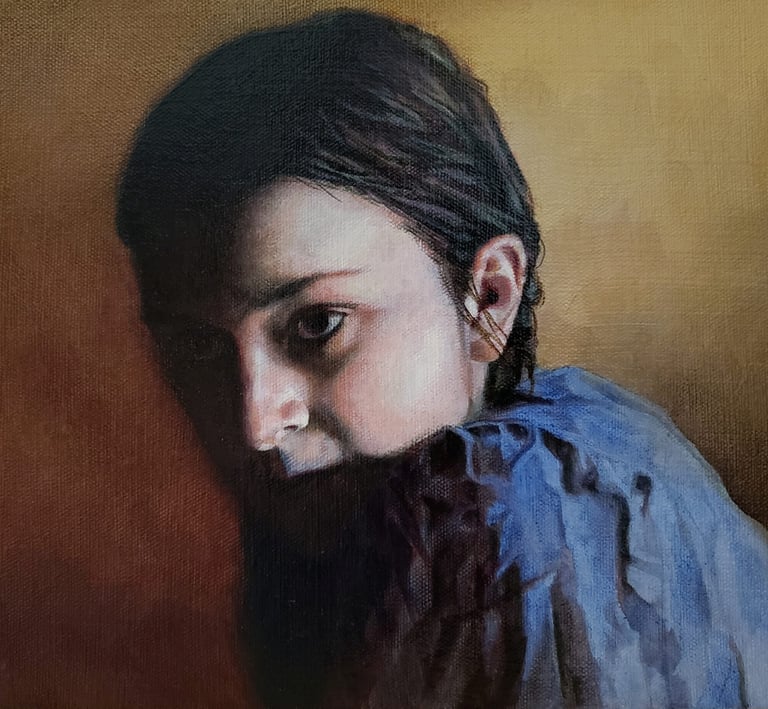
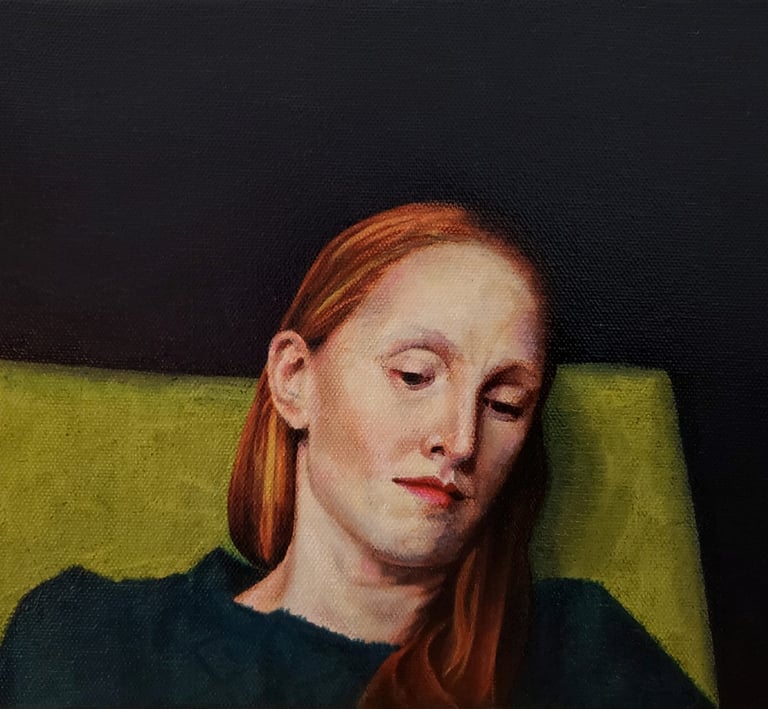
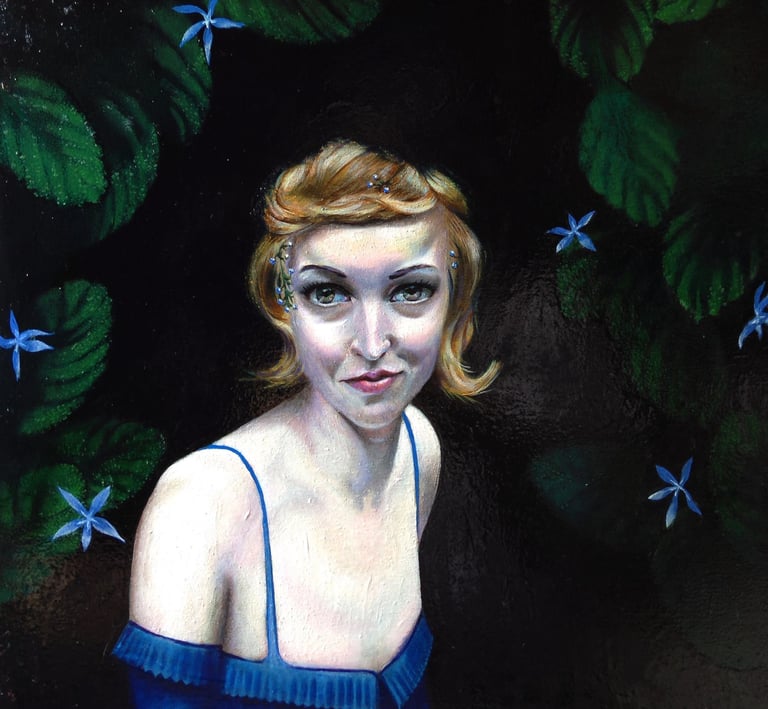
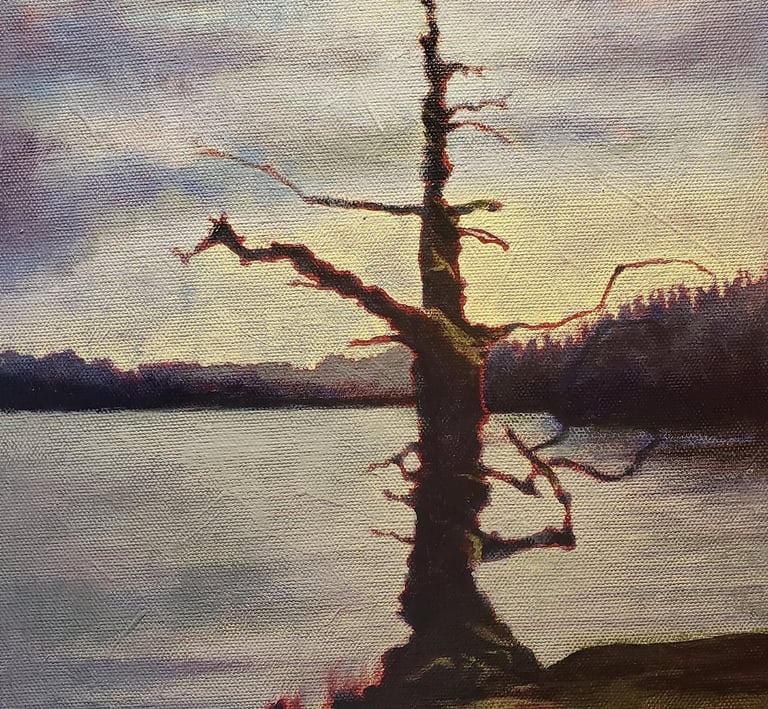
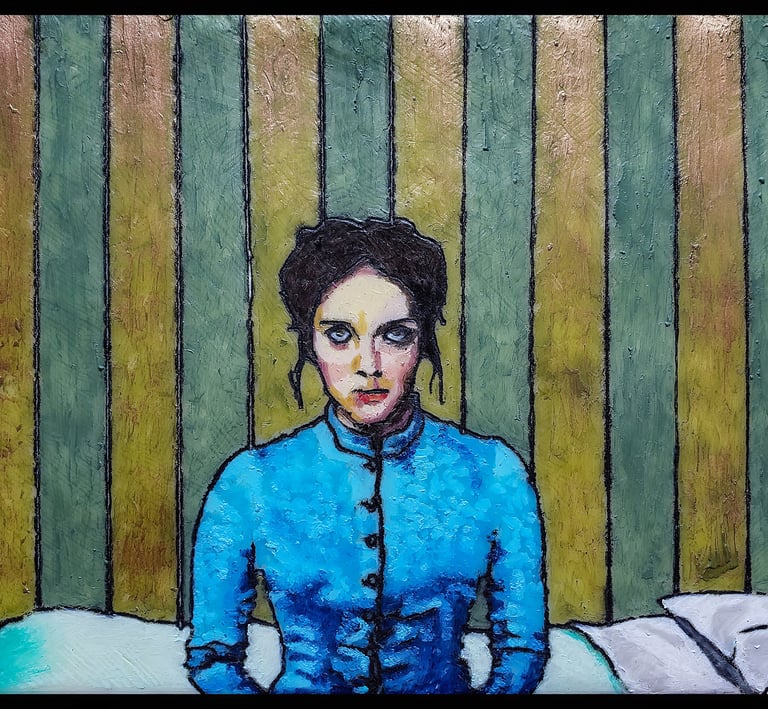
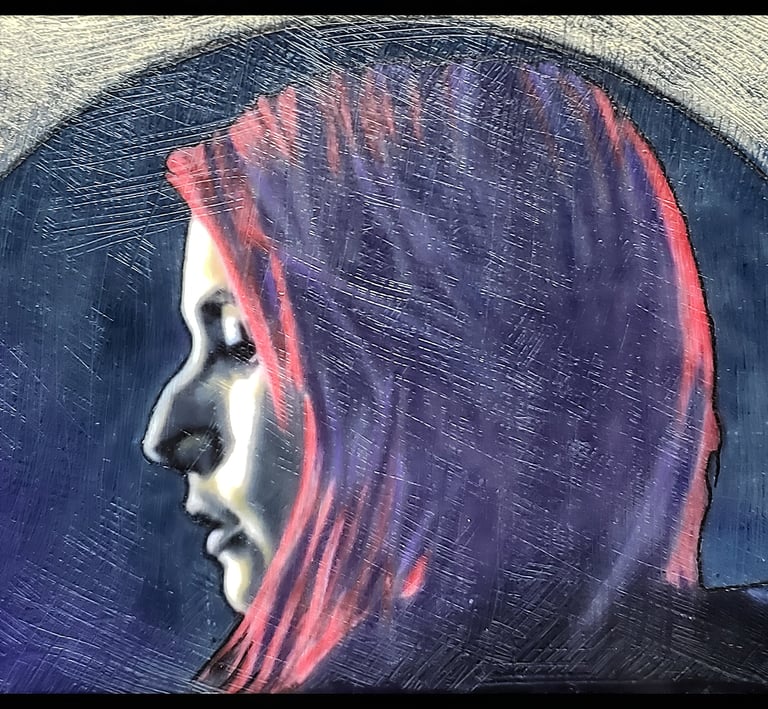
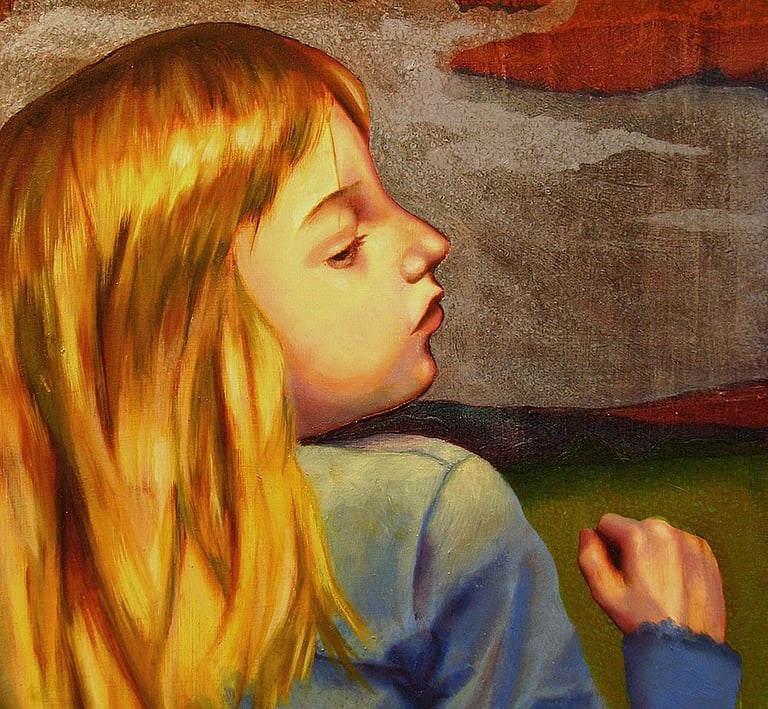
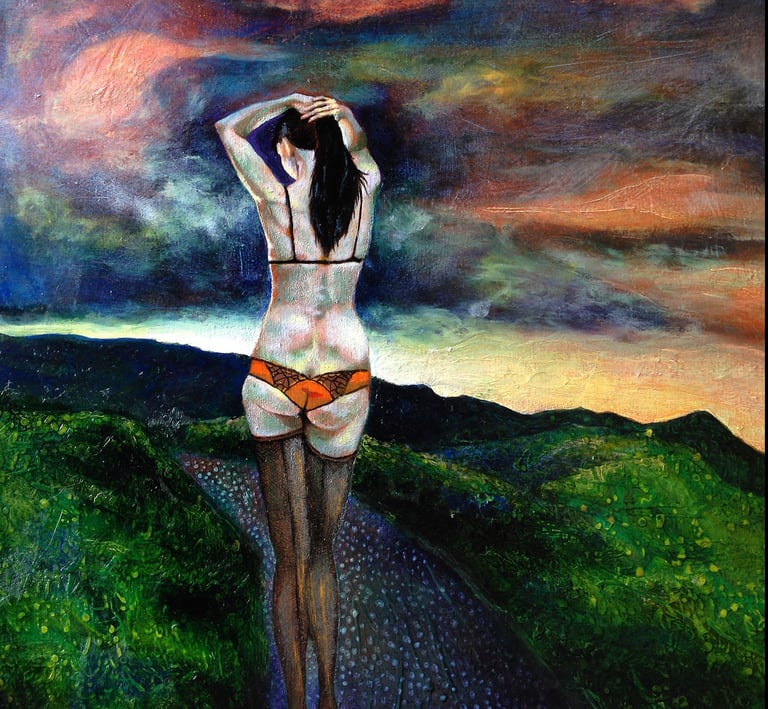
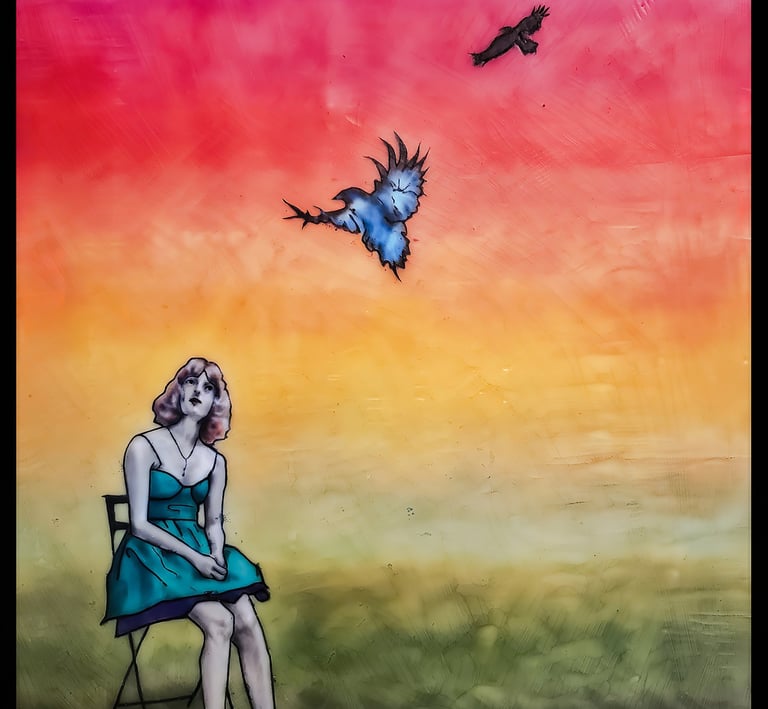
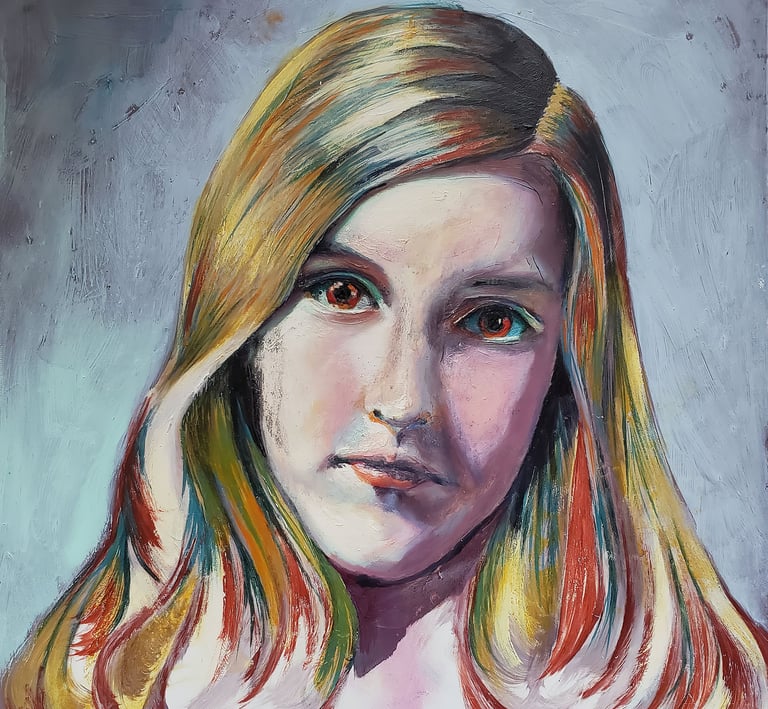
These paintings come out of years spent working in oil and encaustic, and almost all of them revolve around the same interest: how to paint the mind without dressing it up. I’ve always been drawn to the unguarded moment, the instant when someone isn’t performing for the world. That’s where the psychological weight lives. Over time, this became the foundation of my practice, and the place where I return whenever I’m trying to understand presence, absence, or what it means to look closely at another person.
The approach is simple: light, color, and the way space presses on a figure can say as much as expression ever could. These choices build the tension in the work. They create a feeling before the viewer knows why they’re feeling it. The gaze might be lowered, the posture slightly withdrawn, or the figure caught in a moment where nothing outward is happening but something inward clearly is. I’m not interested in portraiture that performs for the viewer. I’m after the quieter states—the ones that show up when no one is asking for a pose.
The paint carries part of this responsibility. Heavy outlines, dragged brushstrokes, shifts in texture, areas of thick material: all of these reveal the time spent looking and deciding. The surface becomes a record of attention. Encaustic makes this even clearer. Layers of wax are built up and scraped back, revealing earlier decisions, earlier colors, earlier thoughts. You can literally see the history of the painting on the surface. The oils work the same way, though in a different language. Nothing is polished to the point of hiding the work behind it.
Color rarely behaves descriptively. Hair might shift into unexpected hues. Backgrounds may flare into saturated fields. These choices aren’t attempts to break from observation. They’re attempts to show what sustained looking feels like. Anyone who has stared at someone long enough knows that realism begins to slip, and the subject takes on a strangeness that doesn’t appear in photographs. The painting becomes a record of that distortion, how attention shapes what it tries to capture.
Across all of this runs the same set of questions. How do you make something interior visible? What does it mean to be present with another person? How does a moment hold still long enough to be painted, and what happens when it doesn’t? These paintings sit inside those questions without trying to solve them. They give space to ambiguity, to the difficulty of knowing another human being, to the distance between the surface of a face and the experience behind it.
This decade of work—this slow process of watching, waiting, and painting without forcing resolution—is the ground everything else grows from. The digital work, the hybrid explorations, even the AI-generated pieces all trace back to these early attempts to understand representation and the limits of what an image can contain. The tools have changed, but the inquiry hasn’t. It started here, with paint, time, and the quiet work of trying to see.
Contact
Reach out for commissions or course info
valeriacsizmadia@gmail.com
© 2025. Parallax Studio