About
Valeria Csizmadia
Valeria Csizmadia is a visual artist working at the intersection of traditional painting and algorithmic image generation. Based in Toronto, she holds a BFA with Distinction from Concordia University and has maintained a professional painting practice for over a decade, specializing in psychological realism that explores interior psychological states through formal means like light, color, spatial tension, and the quality of a gaze.
Her work investigates what surfaces conceal. The current AI-generated series Studio Ruins examines the gap between polished artistic presentation and the blood and material waste required to produce it, revealing the class violence inherent in an art market that profits from artists it refuses to sustain. The Doppelgänger series explores psychological fracture through visual doubling, investigating identity as unstable multiplicity rather than fixed self.
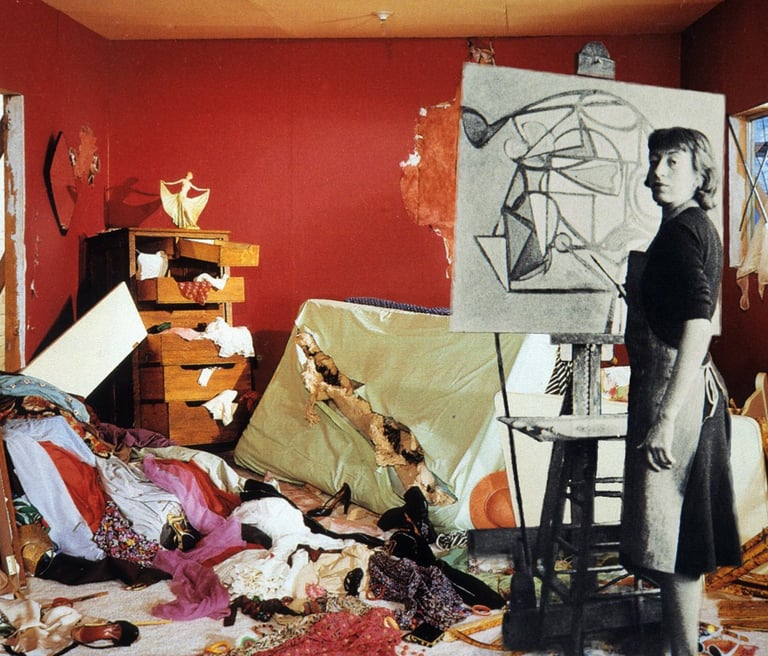
This inquiry into hybridity, transformation, and impossible spaces predates the current AI tools by over a decade. From 2010 to 2014, Csizmadia created extensive digital collage work layering photographs, paintings, and found imagery into surreal narratives. Ornate interiors penetrated by apocalyptic landscapes, mythological figures staged in architectural decay, theatrical compositions that refuse the constraint of depicting a single coherent world. These pre-AI digital hybrids prove the questions driving the current work have been consistent for fifteen years: How do we represent consciousness? What can images reveal about interior experience? When does hybridity become a form of truth-telling rather than falsification?
The traditional oil and encaustic paintings (portraits, figures, still lifes, landscapes) form the observational foundation for all subsequent work. Heavy outlines, thick paint application, and visible process emphasize the labor of making, the accumulation of material decisions that constitute an image. This decade of sustained attention to psychological complexity without resolution informs everything that follows.
Csizmadia publishes the Pathwright Journal on Substack, translating AI and art research into accessible essays for broader audiences. She operates multiple creative identities including Liska Studio for fiber arts and offers virtual staging services with specialized heritage restoration visualization. Her practice refuses the boundary between craft and computation, between traditional mastery and emerging technologies, insisting that serious artistic inquiry can move fluidly across media without compromising conceptual rigor.
The through-line across all her work (painting, digital collage, AI generation) is a commitment to representing complexity without resolution, to holding space for what resists easy capture, to making visible the gap between surface and depth. The tools change, but the questions remain constant.
My work investigates what surfaces conceal.
Studio Ruins explores the gap between finished artwork and the labor required to produce it. Like Dorian Gray's portrait, these images reveal what polished presentation hides: the blood and material waste, the thousand discarded attempts, the psychological and physical toll extracted from artists who supply a market that doesn't require them to survive.
The ornate architecture (gilt mirrors, crystal chandeliers, elaborate moldings) represents the gallery system, the auction house, the private collection. The pristine walls hold finished work that now functions as asset diversification for the wealthy. The floor tells a different story. This is where the violence accumulates: torn canvases, paint swatches, the visceral cost of decades spent making work that matters to no one who controls access to legitimacy.
The art world runs on the labor of artists it refuses to sustain. It needs the work but not the worker. These images ask: What happens to everyone who did everything right, developed their practice, worked for decades, made significant work, and still couldn't make a living because the market only anoints the politically connected few?
Doppelgängers examines psychological fracture through doubling. Figures in historical dress confronting their reflections, twins in uncanny proximity, selves that refuse singular identity. The mirror doesn't confirm who we are. It introduces doubt, the unsettling recognition that the self we present might not be the self that exists, that identity is performed rather than possessed.
Drawing on Dutch master portraiture and Victorian photography, these images place psychological inquiry within art historical conventions. The formal compositions reference traditions designed to capture and confirm identity, but the doubling undermines that project. We become ourselves through contrast, through the presence of an other who is almost but not quite us. The doppelgänger is the self we might have been, the self we fear becoming, the self we can't reconcile with the person we've decided to be.
Both series reveal that what we choose to show is a lie of omission. The gallery shows the finished work and hides the artist's blood. The portrait shows one self and hides the multiplicity beneath. The unifying question: What violence does representation require?
This inquiry predates the current AI tools by over a decade. My digital collage work from 2010 to 2014 already explored hybridity, impossible spaces, theatrical staging, the refusal of realism. The ornate interiors existed then, already juxtaposed with decay. The questions about what images can reveal when freed from depicting a single coherent world have been consistent for fifteen years.
AI didn't introduce hybridity to my practice. It accelerated what was already being built through painting and digital collage. The shift from hand-mixed oil paint to Photoshop layering to AI prompting is methodological, not conceptual. All three approaches ask: How do we make visible the invisible experience of being alive? What traces of presence can an image hold? When does the act of observation change what's being observed?
The work refuses easy answers. It sits with ambiguity, with the difficulty of knowing another person, with the gap between surface and depth. It insists that the effort of trying to see (really see) is worth the sustained attention required, even when resolution remains impossible.
Artist Statement
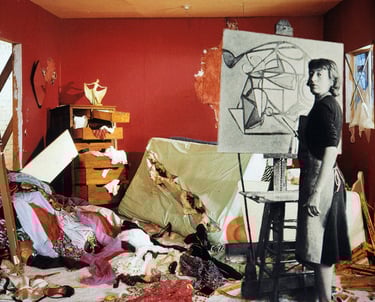
Lee Krasner in Jeff Koons' Destroyed Room, digital collage, 2011
Contact
Reach out for commissions or course info
valeriacsizmadia@gmail.com
© 2025. Parallax Studio