Digital Collage and Illustration
Where colors and pixels tell stories beyond words.
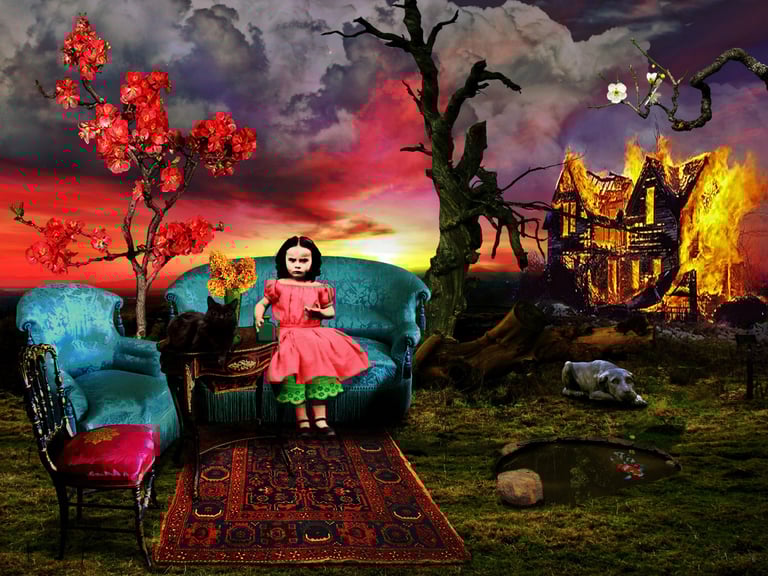
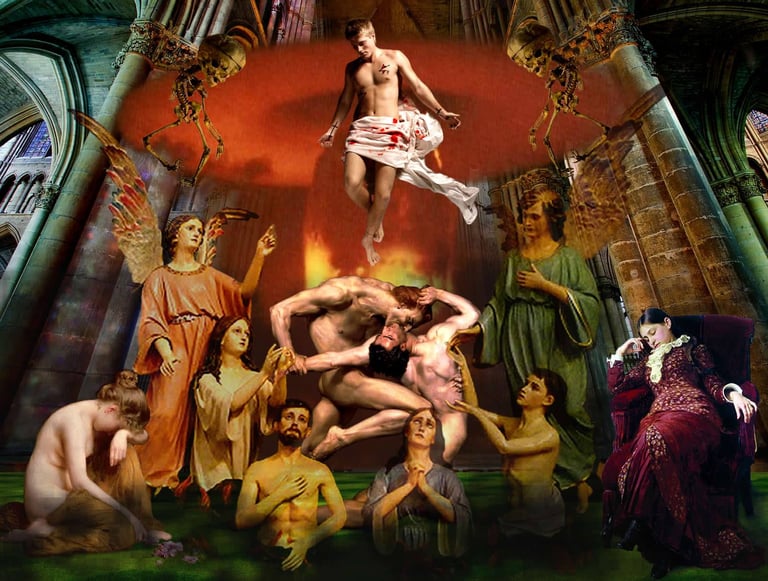
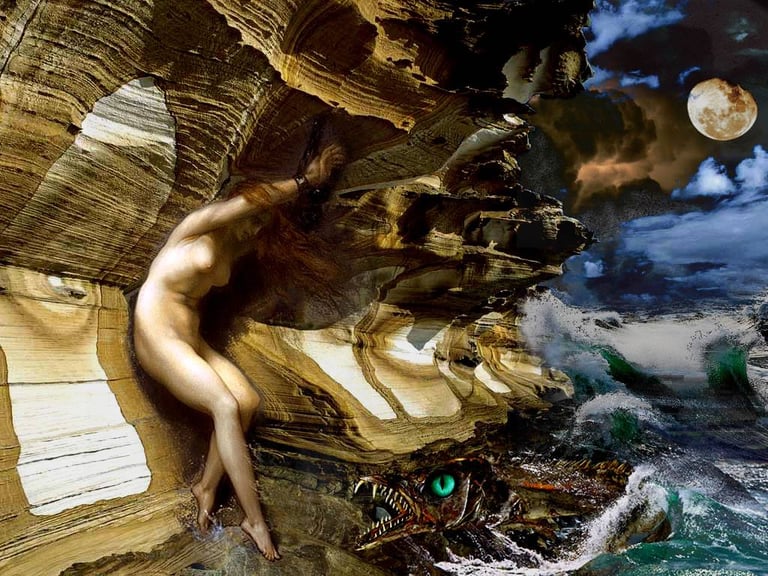
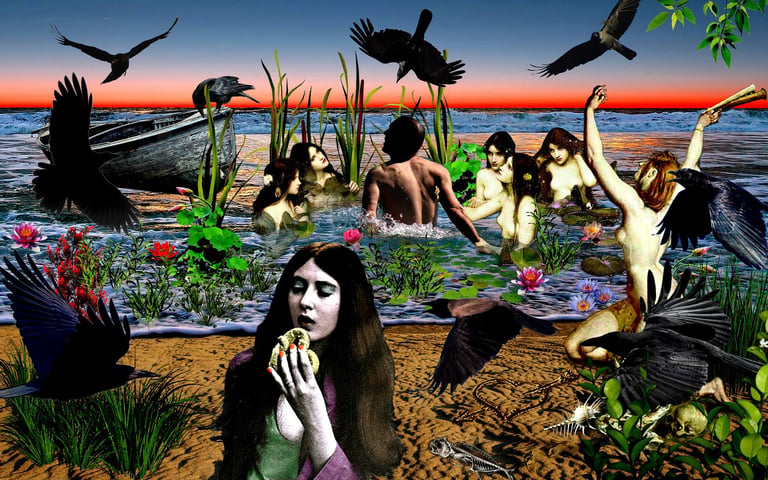
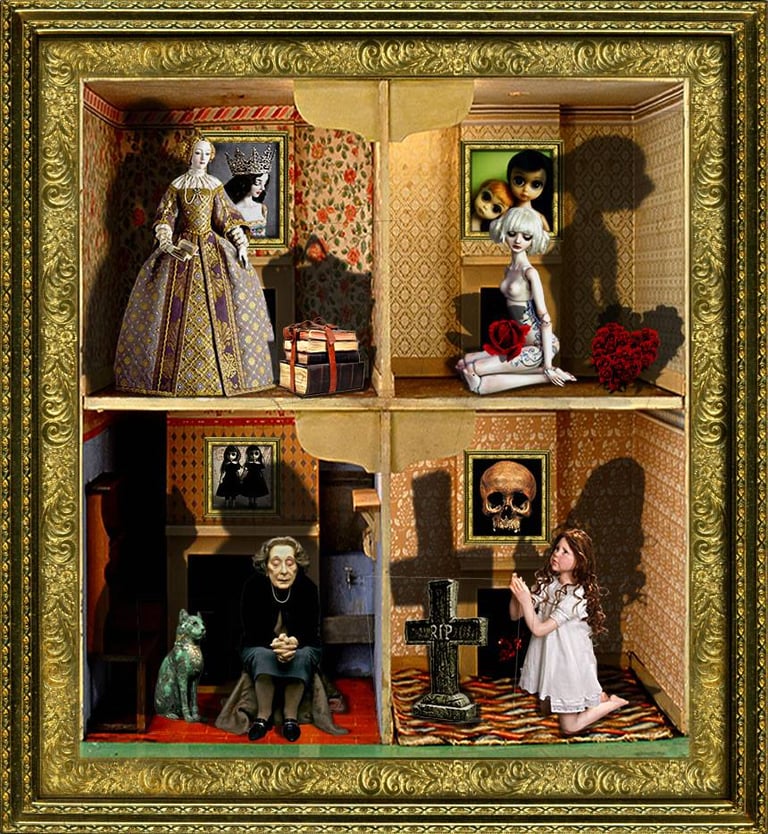
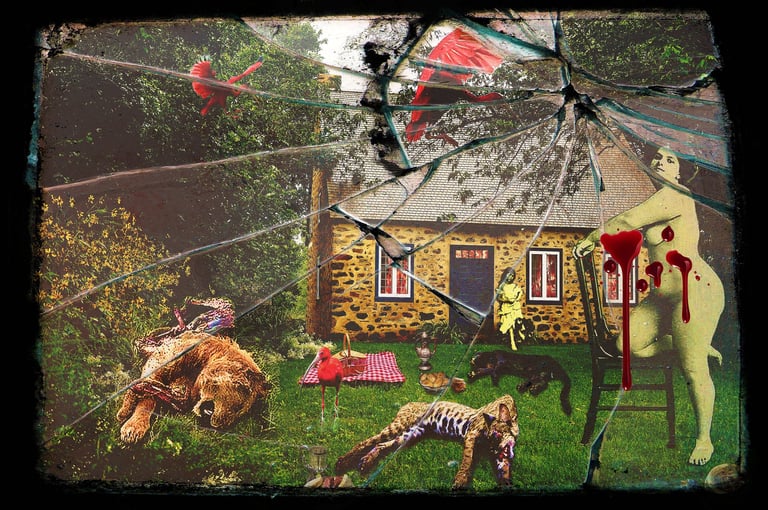
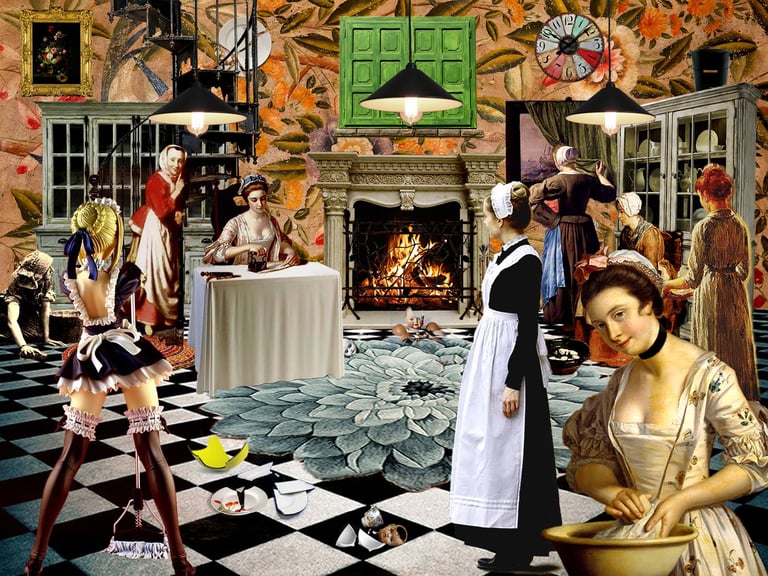
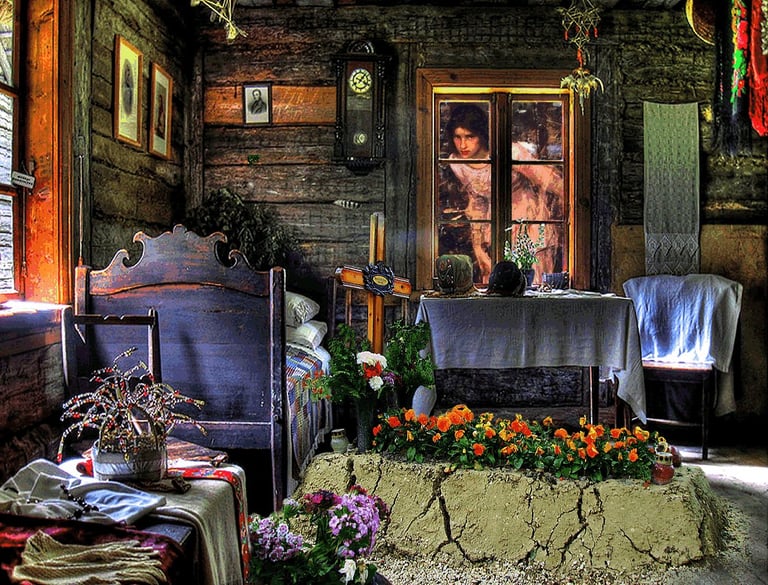
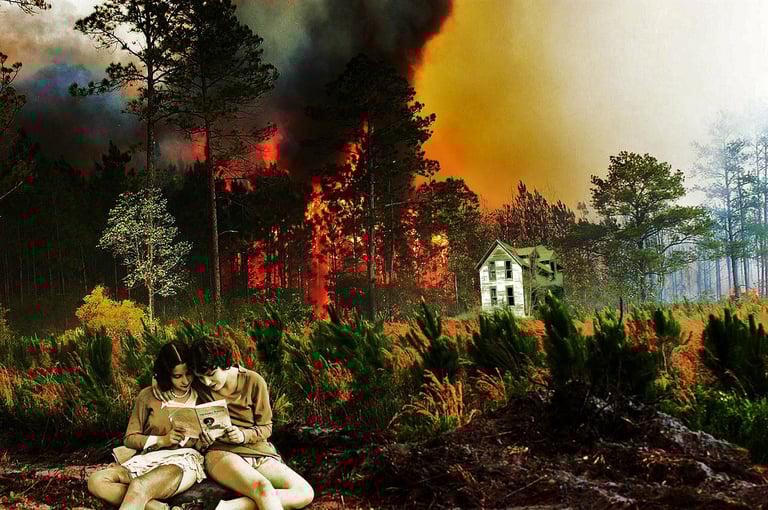
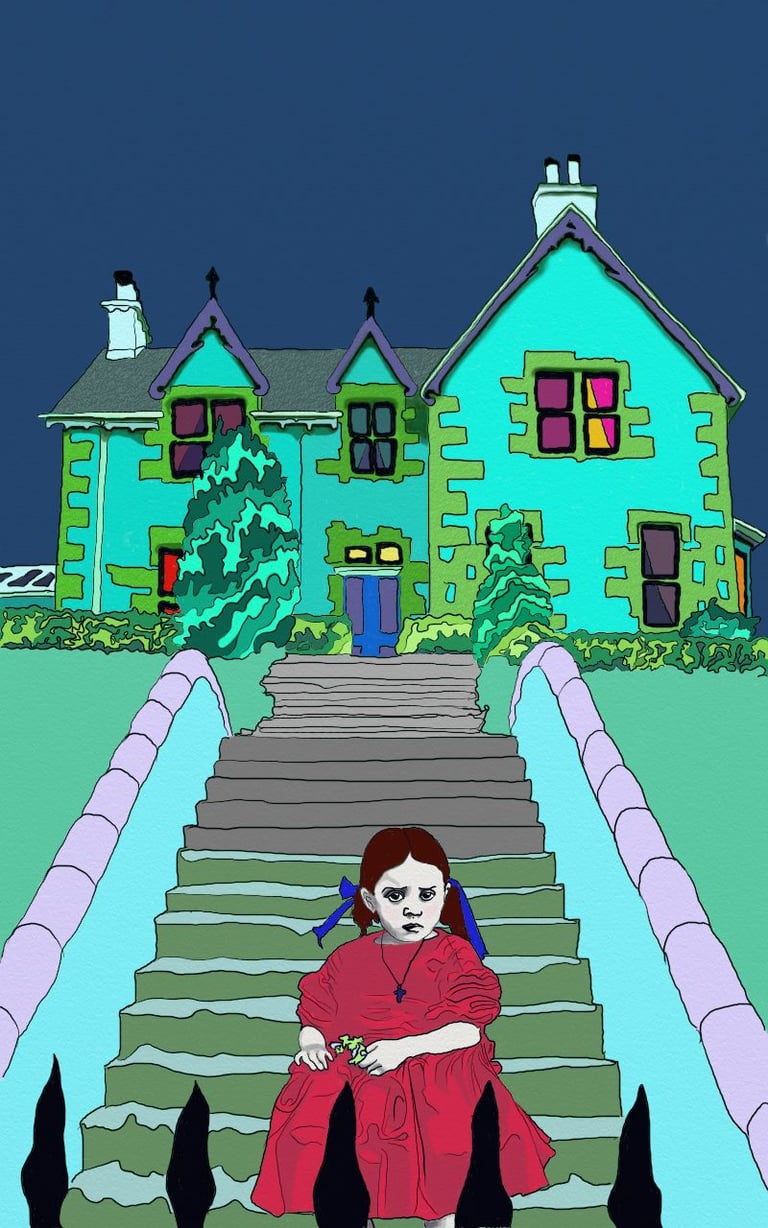
This body of work comes from 2010 to 2014, long before AI image generation was available. This is where my questions started. I wanted to see what would happen if images weren’t tied to one medium or one version of reality. I treated photographs, paintings, old prints, and bits of found imagery as pieces of a larger puzzle, and I used them to build spaces that shouldn’t exist. An ornate room might open out onto a ruined landscape. A mythological figure might wander through a half-collapsed hallway. A historical costume might end up inside a story that has nothing to do with the period it came from.
The process was slow and stubborn. I spent hours finding source material, cutting it apart, layering it, adjusting light and scale, and trying to make pieces from completely different worlds speak to each other. But the drive behind it was clear: what happens if you refuse to pick a side between painting and photography, or between observation and invention? What if the collision becomes the actual method?
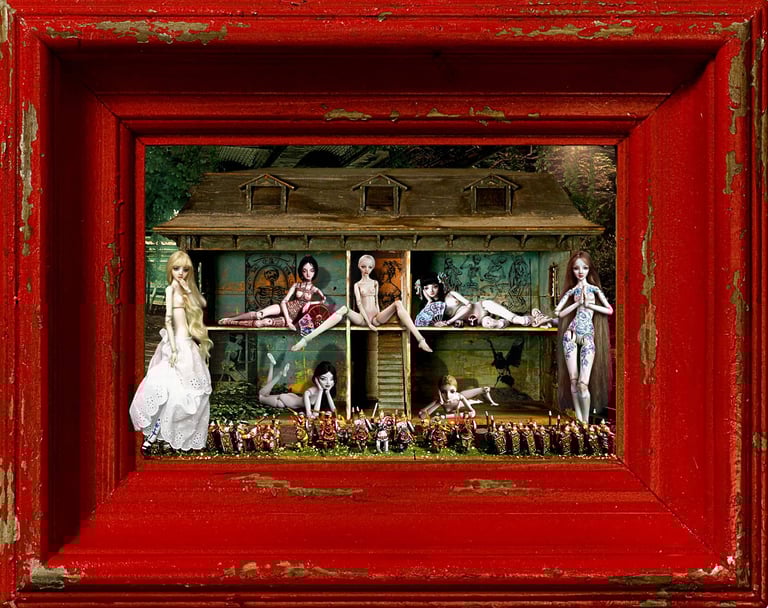
I came to understand hybridity not as a kind of contamination but as a way of thinking. A burning house can sit comfortably next to a piece of Victorian furniture. A classical nude can share the frame with a sea creature. Dolls can live inside tiny stages inside larger stages, each one revealing that any representation—no matter how realistic—is still a kind of theatre. These works never pretend to be documentary truth. They announce themselves as constructed. Because of that, they’re able to say things a straightforward, realistic image often can’t.
The theatrical feel is intentional. These scenes are staged, not caught by accident. Every element has a role: the ornate border that holds the chaos in place, the old-fashioned costume that makes the figure feel displaced in time, the creature or symbol that turns a psychological feeling into something visible. They act like stage sets. Each one creates its own world with its own rules about what can appear in the same image.
Certain themes repeat. Death. Transformation. A sense of vulnerability, especially around the feminine figure. People dressed in historical clothing face moments of threat or decay. Dollhouses become reminders of loss, with skulls, empty rooms, and tiny objects acting like memento mori. Domestic spaces—bedrooms, kitchens, living rooms—never feel sealed or safe. Something always breaks in from the outside, something that doesn’t belong. That tension between a protected interior and an invading exterior runs through everything.
The images are dense. They hold more information than you can absorb at once, and that density is part of the point. They ask for time. They ask you to notice how an eighteenth-century figure relates to the tiled floor, or how a modern light fixture sits against older wallpaper. Nothing is random. Every meeting of visual languages is an intentional choice about what kinds of worlds can sit together in one frame.
Some pieces borrow openly from art history: religious ascensions, classical myths, Dutch still life traditions. Others invent their own systems. A bear becomes a symbol that wanders through multiple collages. Ravens circle a lake again and again. Tiny soldiers gather under a dollhouse bed. Whether the references come from history or imagination, the question behind them is the same: how do images carry meaning, and what happens when you pull a symbol out of one context and place it somewhere new?
All of this was pre-AI. No models, no iterations, no generated suggestions. Just Photoshop, a huge personal image archive, and the slow process of deciding what should sit next to what. The questions behind the work are the same ones that now drive the AI pieces: how can an image acknowledge that it’s built while still carrying emotional weight? How can impossible spaces reflect interior experience? When does hybridity start to feel more honest than realism?
This early work leads directly into the later series like Studio Ruins and Doppelgängers. The ornate interiors were already appearing a decade ago, mixed with debris and abandoned architecture. The historical costumes were already staging psychological tension. The theatrical framing and surreal combinations were already there. AI didn’t introduce any of these concerns. It simply allowed the work to move faster, become more intricate, and explore more variations than I could manage by hand. The essential inquiry—what happens when incompatible realities are forced to coexist—started here, in these digital collages, long before the current tools existed.
Contact
Reach out for commissions or course info
valeriacsizmadia@gmail.com
© 2025. Parallax Studio